Release date: 26 March 2019
Developer: Nine Dots Studio
Publisher: Deep Silver
Genre: Hardcore Survival/RPG

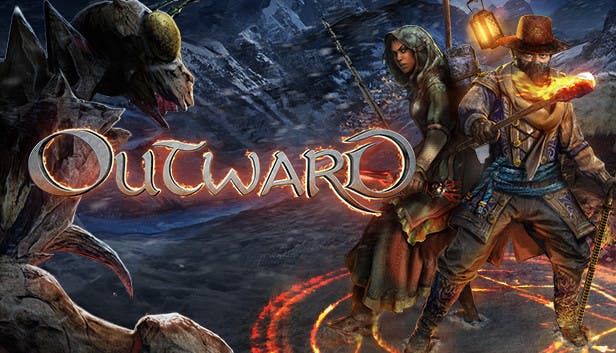
Hello, fellow gamers. I’d like to talk a little about Outward, which came out a few months ago and combines hardcore survival with role-playing. What makes it stand out is the way it brings both sets of elements together on an open-world map. There really aren’t many games where you can fully experience that combination. Outward was made by Nine Dots, a small studio with a few indie games behind it. Reading the About Us section of its website, I came across comments suggesting that working conditions at the big companies dominating the industry are difficult, that employees have limited say in projects and cannot contribute as much as they would like. Nine Dots makes some bold claims about working hours, creative input and listening to ideas, even stating that its employees work a maximum of 52 hours a week. A small studio that also cares about its staff deserves some credit. As players, we should congratulate them on something else too: in recent years, when established companies behind top-tier games have flooded the market with lousy multiplayer-focused releases, they have come to us with a hardcore game like Outward that makes no attempt to appeal to everyone.
Outward’s difficulty alone means it won’t suit every player. Alongside the usual survival elements—hunger, illness and the need for sleep—it has no navigation system, despite being an open world made up of enormous maps connected by transition points. I imagine that decision was intended to reinforce the feeling of survival. You have to find your way with a simple compass, which makes progress considerably harder. In short, prepare to get lost a lot. Another unusual feature is automatic saving: you cannot save manually. Dying is a normal part of playing Outward. There are even locations you may discover as a result of dying. In fact, you don’t quite die. When bandits or one of the creatures scattered across a map defeat you, an NPC who has taken it upon themselves to rescue you carries your injured body somewhere safe. Depending on the map, you may open your eyes in a town inn or in a cave with a strange creature beside you. Outward has none of the experience points, or XP, we are used to in role-playing games. Your character’s development depends entirely on silver coins, the game’s currency. Trainers in the towns offer various skills to unlock. You do this using the three skill points you receive at the beginning and silver coins that are quite difficult to accumulate. Unfortunately, the combat mechanics give you another struggle to deal with. They certainly did for me. You can block with any one-handed or two-handed melee weapon. When you approach an enemy, your character automatically locks on and turns towards them. You can then use your shield to defend against attacks and strike when an opening appears. Alternatively, you can fight without a shield and dodge with the space bar. To do that effectively, you first need to drop your backpack. The game provides a convenient option to drop it with one button during combat. You can fight with it on, but its weight slows your dodges. Lock-on works reasonably well against a single opponent. Against several, however, it leaves you exposed to the others. You can turn automatic lock-on off with X. The damage system is also quite realistic, in keeping with the hardcore approach. No matter how strong your armour, enemies can bring you down in a few hits. Alongside many melee weapons, there are bows and pistols for the elf players who prefer to fight at a distance. You can play Outward with a friend on the same computer in split-screen mode, or together over a network.

Outward has some very large maps, linked by transition points. Yet for a game presenting itself as an RPG, maps of this size feel rather deserted. Apart from a handful of towns, almost every location in the open world is full of enemies. If you are tired after hours of travelling and hope to find somewhere safe nearby, don’t hold your breath. That newly discovered place whose walls you can see in the distance will probably turn out to belong to more bandits or elemental creatures. The developers have therefore given you a bedroll and a way to make a fire as part of your backpack equipment. When you become tired while exploring these enormous maps, you can light a fire somewhere you consider relatively safe and rest in your bedroll. Depending on how dangerous the area is, you may need to allocate hours to keeping watch while you camp, extending the overall time you need for rest. Your character also responds to the changing seasons. In very hot weather, you sweat and overheat, and need to drink plenty of water. In cold weather, you need hot tea and reasonably warm clothes to avoid freezing when you leave the fire. A poisonous creature’s attack calls for an antidote; eating spoiled food means you will need another recipe to settle your stomach. Getting to grips with crafting early and expanding your recipe list by experimenting with different combinations will help you learn mixtures that protect against illnesses and negative effects before you need them.

I won’t go into the story in too much detail. Speaking of the story, the game also supports Turkish, and this isn’t the sort of tourist Turkish we see in some games. A great deal of effort has gone into it, and the result is a good translation. The translators deserve congratulations too. The game begins as though it were a sequel to something we have already played. That’s the feeling it gives you. After a shipwreck, you open your eyes in a town called Cierzo—or ‘Kierzo’, as I pronounce it—a name meaning a wind blowing from the north. The ship bringing you to town struck the rocks, killing 12 people. The reason was that the lighthouse wasn’t working. Ironically, that lighthouse is also your home in town. The accident claims the lives of 12 of the townspeople’s relatives, and Cierzo’s traditions require blood money to be paid to the families. They demand that payment from you. In this village, responsibility for a mistake or crime committed by someone in your family, deliberately or otherwise, passes to you as well, and your family is disgraced. That’s the custom. Doesn’t it sound familiar, almost like something from home?
The village elders ask you to find 500 silver within five days and pay it to the victims’ families as blood money. Personally, I don’t know whether anyone has managed it, but right at the beginning of the game, finding that much silver in five in-game days seems impossible. If you have done it, let me know in the comments. Collect the money and you keep your house. Fail, and you lose the lighthouse where you have been staying and storing your belongings: it becomes a dormitory for the village soldiers. You are politely driven out of the village. After this period, which serves as a kind of tutorial, you find yourself exploring paths across vast stretches of countryside. Quests from the NPCs you meet in Cierzo will also help you explore the first map.
All in all, Outward is a very different and difficult game. Its survival and crafting elements stand out more than its role-playing. I recommend it to anyone who enjoys hardcore games. If you liked our review, you can support us by clicking Like and subscribing. Thank you!