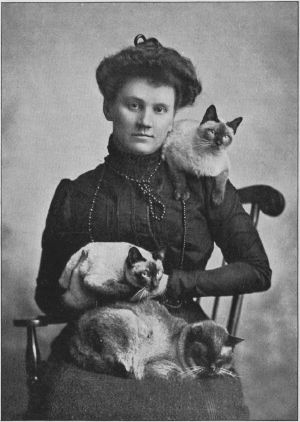

Of all our animal companions, cats may be the best suited to sharing a home with us—provided, of course, that you have a sense of responsibility. They quickly adapt to their homes, accepting their play areas, toilets and feeding places as their own. If you are bringing a cat into your living space for the first time, first decide whether you are a “cat person.” Loving cats and living with them involves a different kind of responsibility from keeping many other animal companions. Loving a cat means a journey of companionship without expectations. Often, that lack of expectations even turns into a one-sided responsibility to serve.
Cat people have reached a certain level of understanding and awareness and have devoted themselves to being their companion’s “human.” Remember: you cannot own a cat. You become its human.
You can be a dog’s companion. It brings your slippers, learns commands, protects you; you show it where to sleep and it sleeps there without complaint. Dogs are loyal friends and companions in every sense. They don’t judge you, and with proper training they will stay within your rules. Their human companions have the greatest influence on their character. Every movement and attitude of the owner affects the dog. In the right, loving hands, a dog can become your family’s closest friend; in the wrong hands, it can turn into a source of uncontrolled violence and fear.
You cannot change cats. You have to accept them “as they are,” with their own personalities and ways of life. If you get a cat at a young age, you may teach it a very limited set of boundaries, but you can never draw it into a chain of command through which you directly control its daily routine. It won’t agree to a relationship of superior and subordinate with you. Cats are the anarchists of the pet world. And such a relationship is not something a cat person should expect from a companion anyway.
Cats are creatures that cherish their freedom. They like their comforts and have no interest in meeting expectations; they do not live with that sense of obligation. Whether you keep them at home or they live on the street, they remain distinctly themselves and never compromise their personalities.
Although cats have adapted to city life, they have managed to retain almost all the genetic characteristics of their ancestors. Thanks to these enduring traits, they are meticulous about cleanliness and have tastes in food that could put humans to shame. The pleasure of welcoming them into your home, with their natural, free and untamed ways and their unmatched elegance, and of sharing a life with them, is impossible to describe. They quickly become members of the household: depending on their character, the rebellious child, the quarrelsome son or daughter, the quiet one, the grump, the sleepyhead or the hunter. But in a cat person’s eyes, they can never be ungrateful. The idea of the ungrateful cat is a false story invented by the human ego, which expects submission and complete acceptance from cats, and repeated without thought. It comes from the belief that, in exchange for opening our homes and feeding animals, we are entitled to service, repayment or signs that they are becoming human.
Societies with rural roots often have prejudices about cats. In rural households, every animal was kept for a purpose: chickens for meat and eggs; sheep and goats for meat, wool and milk; dogs to protect the house and flocks from wild animals. Within that system, forming an emotional bond with a cat seemed pointless. It was enough for cats to clear mice and rodents from barns and stores. Even today, cats are used in rural areas as a natural means of controlling mice and small rodents. Harsh conditions and rural life offer a good example through which to observe the reciprocal relationships and cycles between people and animals. In that cycle, cats survived through their hunting abilities, their food sources became useful to people, and they managed to retain a place in human communities right up to the present. Their domestication also came with settled life and agriculture. In a process dating back 8,000 to 9,000 years, the ancestors of today’s cats were domesticated to protect grain from mice and other rodents. This period of domestication and good relations with people continued into the Middle Ages, when different religious beliefs and the growing popularity of fanatical ideas assigning cats a satanic role turned it into fear and hostility. Cats, once deified in Egyptian history, with even harming one punishable by death, were suddenly portrayed as demonic beings and associated with witches and witchcraft. During this period, cats were killed in great numbers and driven into the wild. The slaughter continued through the Middle Ages, and disrupting nature’s balance proved costly for humanity. As the cat population was almost wiped out, mice and disease-carrying rodents multiplied unchecked. Plague, one of the deadliest events in human history, spread and killed thousands. As plague spread, the cats that had themselves been threatened with extinction became useful in fighting the disease by hunting the rats that carried it, and regained their place among human communities.

With the transition to modern city life, cats were no longer needed. As chemicals and developing industries took over the fight against diseases and rodents, cats that had lived alongside people for centuries and indirectly made their lives easier were condemned to survive as supposedly ungrateful strays among human rubbish and the dangers of the modern world.
Yet love for animals is a natural consequence of being human, a response to sharing our planet with other lives. It is the struggle to feel responsible and do something without expecting anything in return for the other creatures trapped alongside us in our cities, forced to live under our conditions on a planet we have altered, damaged, destroyed, covered in concrete, polluted, drained of resources and claimed for ourselves.
Being a cat person is the embodiment, in modern human beings, of love and respect for cats: living examples of nature’s extraordinary elegance that protected our ancestors’ food supplies for centuries without expecting anything in return as those ancestors moved from hunting and gathering to settled life; that stood beside people in the struggle against disease; and that have inspired artists and art throughout history.
Being a cat person is an anti-capitalist stance towards life and society. Once you recognise that the modern human world amounts to an endless frenzy of consumption, it offers a chance for people who build their entire lives and relationships around profit and loss, income and expenditure to feel a little of the “pure” and “unconditional” love they cannot find in their own corrupted system.
Love cats and respect them. They could have been running free and hunting across endless green landscapes when we brought them into our lives. They slept in Egyptian emperors’ gilded beds, walked the solid marble corridors of magnificent castles and mansions, and rescued farmers for years. Still they were driven out and slaughtered; still they were called ungrateful. Despite what we have done for thousands of years, they have not given up on us. At the point both they and humanity have now reached, they need us more than ever. Neither their legacy nor their fate should condemn them to living on the edge of death in concrete cities, crushed in agony on asphalt beneath cars. Now it is your turn.
